Dhruva wallpaper generator
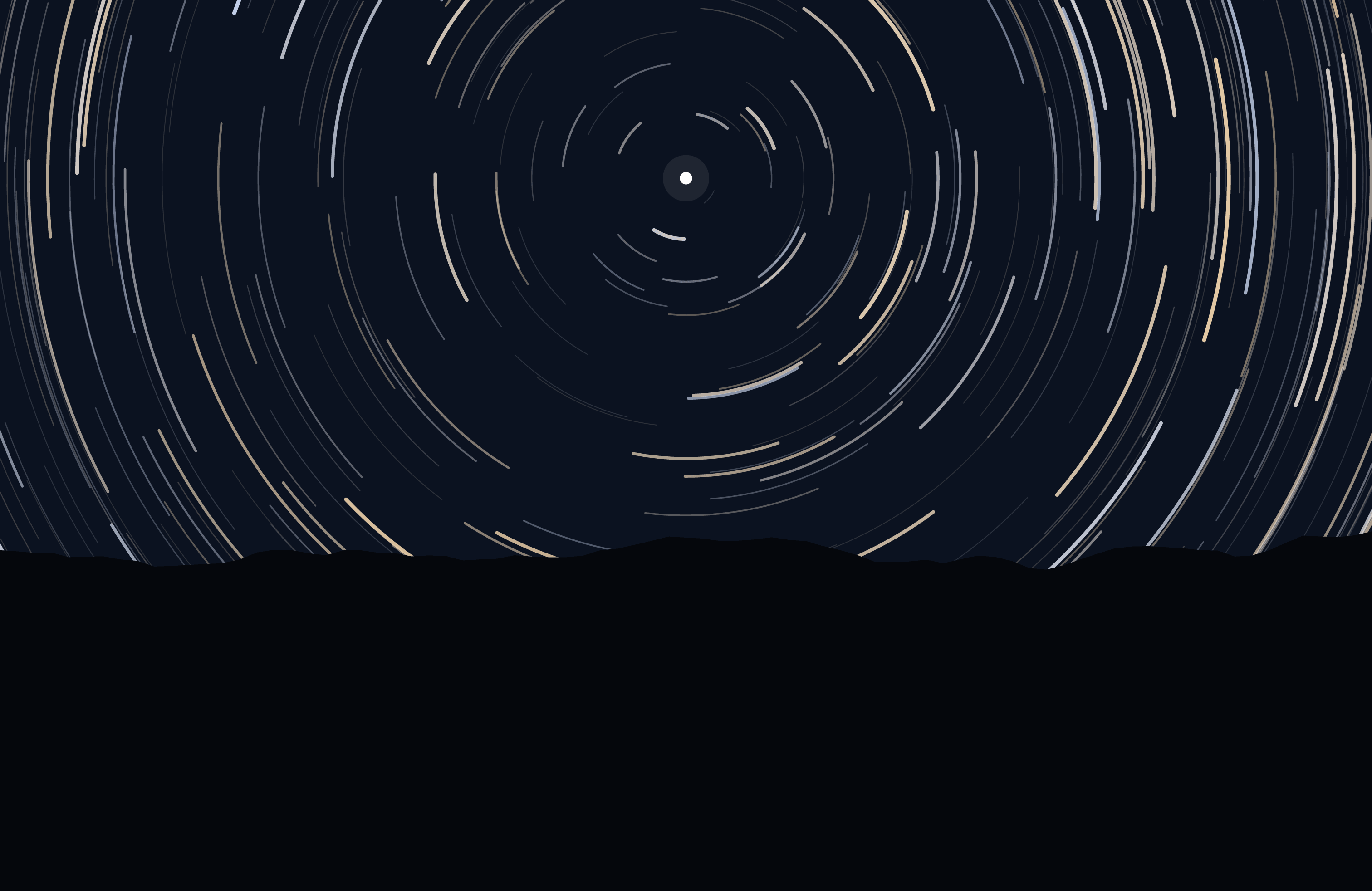
Dhruva, the child whose devotion to Vishnu made him the pole star: a long exposure where the whole sky wheels around one point that never moves.
Presets
Sample wallpapers
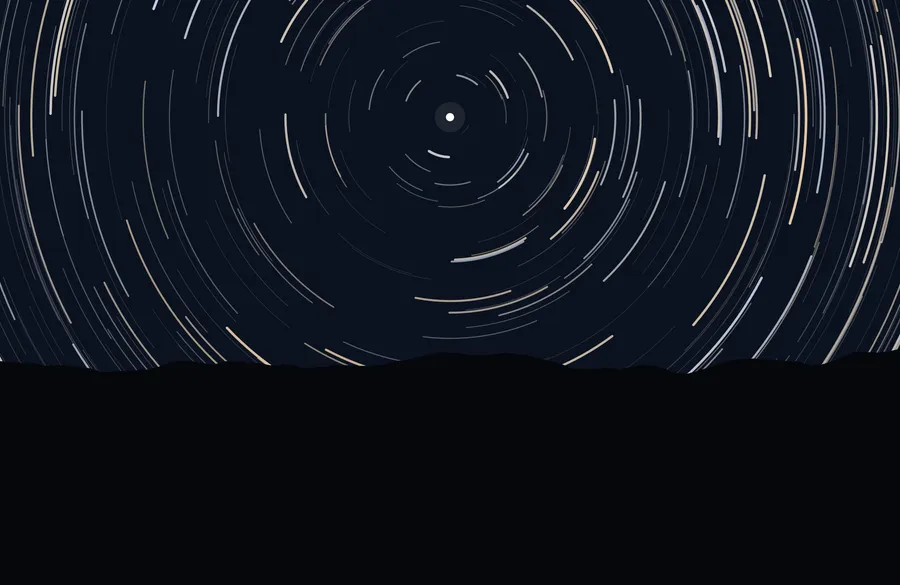
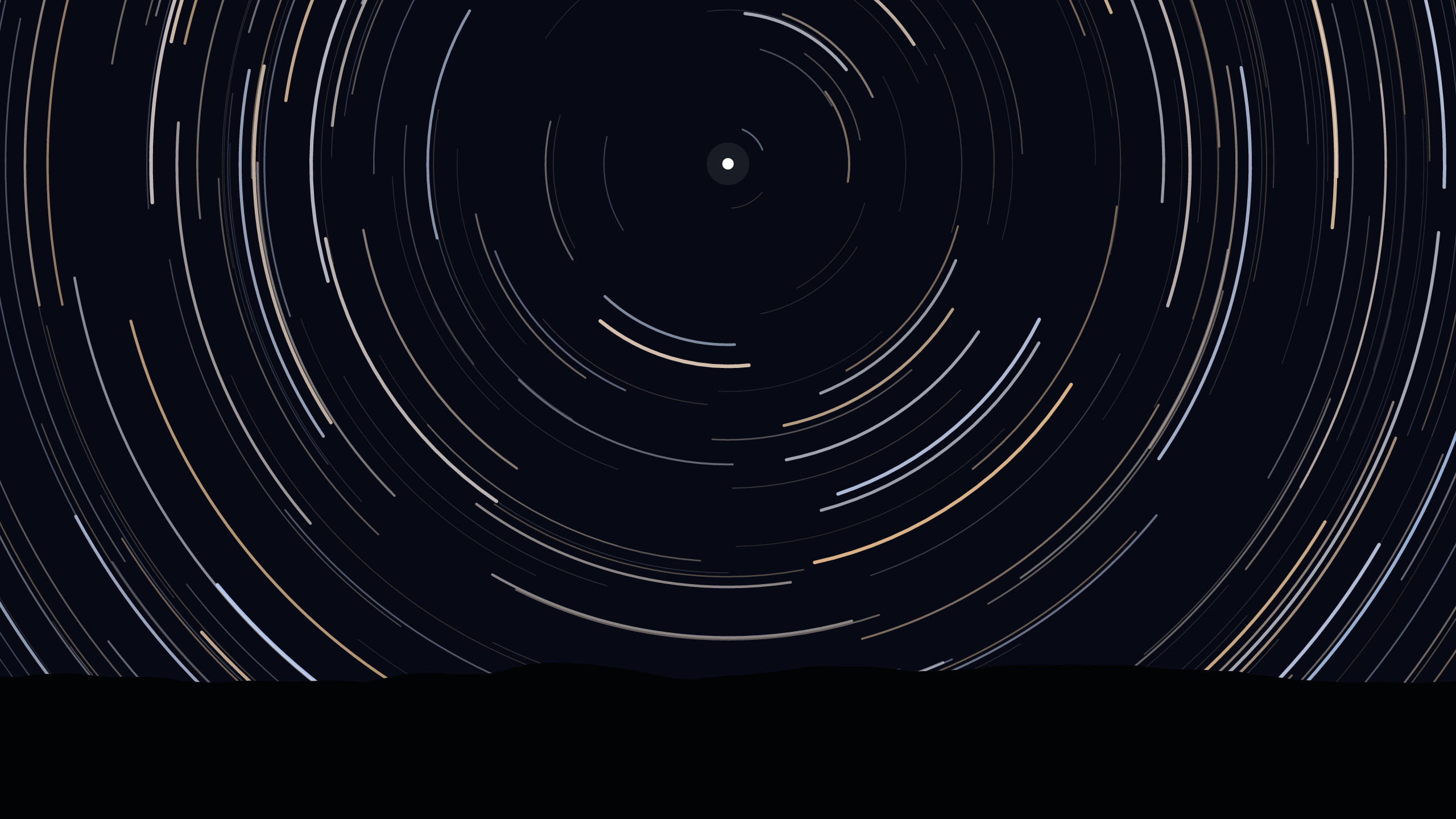
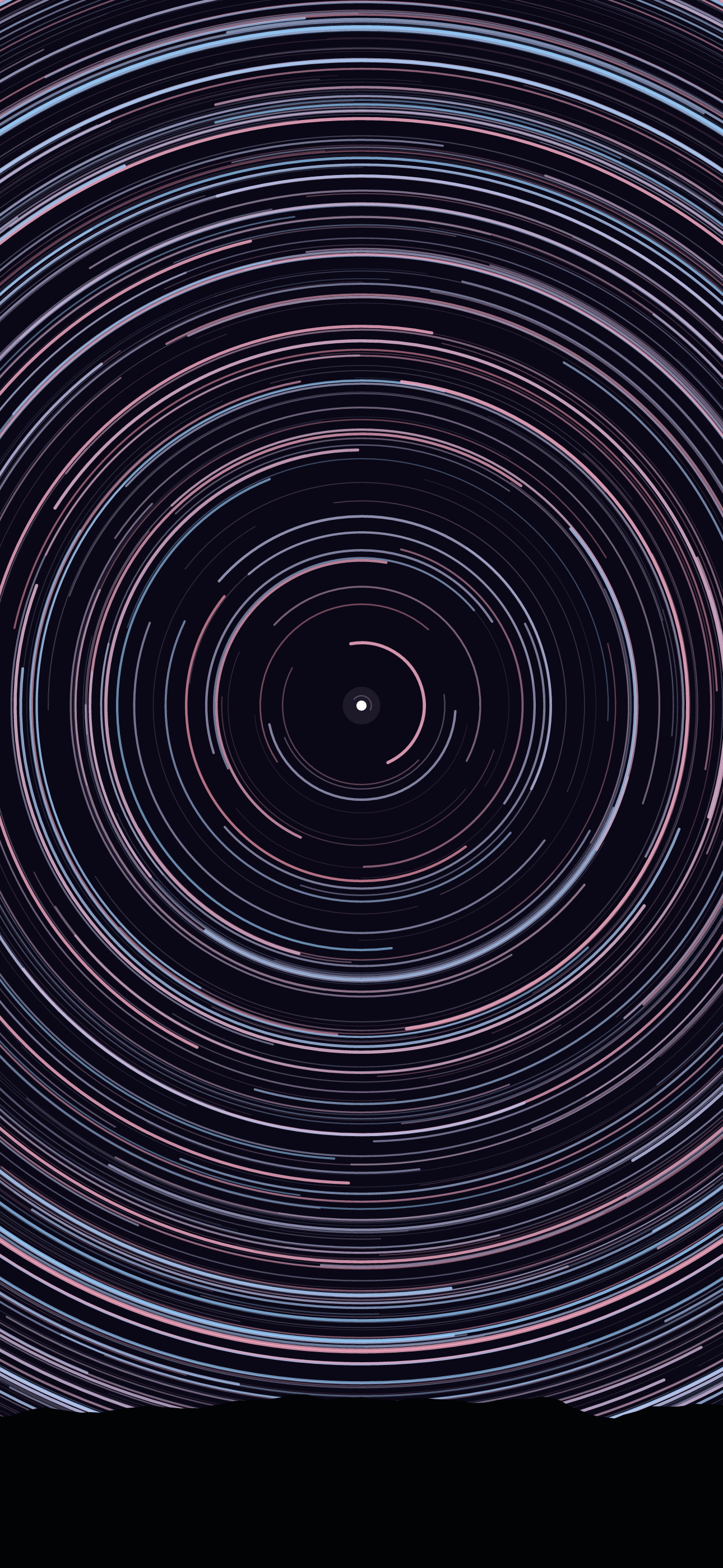
Full-size PNGs rendered by the same code as the studio. Open one to download it.
Parameters
| Key | Label | Values | Default |
|---|---|---|---|
bg | Night | hex colour | #070a14 |
warm | Warm stars | hex colour | #ffcf9a |
cool | Cool stars | hex colour | #b9d4ff |
pole | Pole star | hex colour | #ffffff |
land | Land | hex colour | #020305 |
stars | Stars | 40 to 900 | 380 |
hours | Exposure (hours) | 0.5 to 12 | 3 |
pos | Pole star | high · centre · corner | high |
horizon | Land | 0 to 0.4 | 0.14 |
seed | Seed | integer | 17 |
background.trueBlack | True black (OLED) | on / off | false |
text.none | No text | on / off | false |
text.line1 | Quote line 1 | text | सब घूमे, |
text.line2 | Quote line 2 | text | ध्रुव अटल। |
text.paragraph | Paragraph | multi-line text | |
text.position | Position | center · upper · lower · top-left · top-right · bottom-left · bottom-right | lower |
text.font | Font | serif · display · sans · grotesk · mono · hindi | hindi |
text.size | Text size | 1.5 to 16 | 4.6 |
text.color | Text colour | hex colour | #ffffff |
Dhruva, explained
About this look
Dhruva is named after the boy in Hindu tradition whose steadfast devotion to Vishnu earned him a fixed place in the sky as the pole star, Dhruva Tara. Everything else in the heavens circles around him while he stays put. The default text, in Hindi, says it in four words: everything turns, Dhruva stays still.
Visually it borrows from star trail photography. Point a camera at the northern sky, leave the shutter open for hours, and the Earth's rotation smears every star into an arc around the celestial pole. The longer the exposure, the longer the arcs. I wanted a wallpaper that tells the story and shows the astronomy at the same time.
How it works
First the code fixes the pole star's position: centred near the top for High, a little above the middle for Centre, or toward the upper right for Upper corner. It then measures the distance from that point to the farthest corner of the screen, so trails can reach every part of the display.
Each star is given a distance from the pole and a starting angle. Distances are spread so stars are evenly scattered by area rather than bunched near the centre. From its start, every star sweeps an arc of 15 degrees for each hour of exposure, all in the same direction, which is how the real sky turns. Brightness is skewed so most stars are faint and a few are bold; brighter stars get thicker, more opaque trails. Each star's colour is one of seven steps between Cool stars and Warm stars.
The pole star itself is a small solid dot with a faint halo. If Land is above zero, a dark ridge is drawn along the bottom from fractal noise, so it looks like a distant hill line or mountain range silhouetted against the trails.
Settings explained
- Exposure (hours)
- From half an hour to 12 hours. Short exposures give short dashes, almost like a still sky. Around 3 to 6 hours gives the classic arcs. At 12 hours every trail is a half circle.
- Stars
- From 40 to 900. A few hundred looks like a dark country sky; the top of the range packs the screen with fine concentric lines.
- Pole star
- High, Centre or Upper corner. Centre puts the pivot in the middle so arcs circle the whole screen; Upper corner puts the pivot off to one side so the arcs sweep across the screen diagonally.
- Land
- How much of the bottom the ridge may occupy, up to 0.4. Set it to 0 for sky only.
Best for
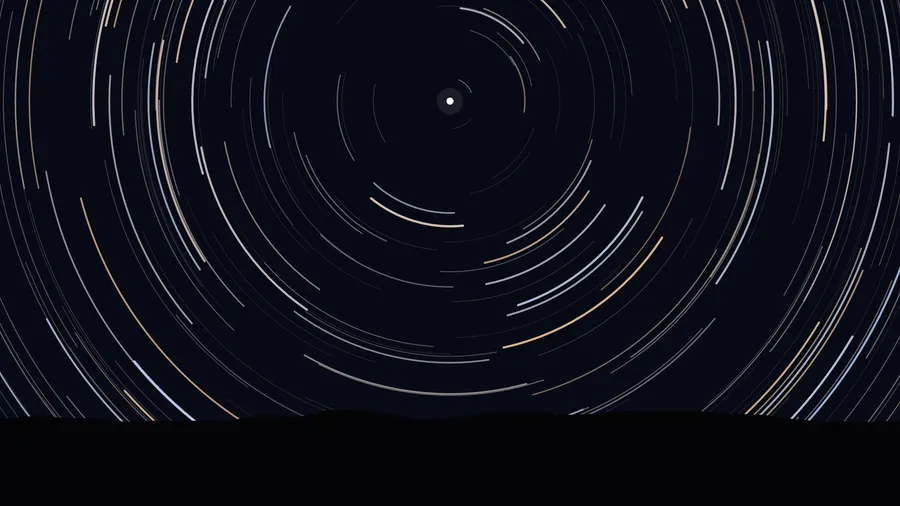
With the pole high on the screen, the trails curve down and around the clock area on a phone, and the land fills the bottom behind the dock. On a desktop, Centre with a long exposure gives a striking target of rings. Long night is the default, three hours over a low ridge. A full night runs eleven hours with the pole centred, almost closing each ring. Himalaya uses a short two-hour exposure, many stars and a tall mountain line. Paper (light) draws ink-coloured trails on cream, and Few stars is a minimal black version with just 60 grey trails from the corner.
For OLED phones, the True black (OLED) toggle sets both Night and Land to pure black, so the ridge vanishes into the sky and only the trails are lit.
FAQ
Is 15 degrees an hour accurate?
Yes, close enough. The Earth turns once in a little under 24 hours, so the sky appears to rotate about 15 degrees each hour around the celestial pole.
Does the real pole star never move?
Polaris, the star traditionally identified with Dhruva Tara, sits under a degree from the true pole, so in long exposures it draws a very tiny circle. Here it is drawn perfectly still, which is the point of the story.
Can I change the Hindi text?
Yes. Edit the quote lines and pick any font. The Hindi (Tiro Devanagari) font is selected by default so the Devanagari renders properly.
Related looks
More generators to try, or see all 37.
Kintsugi
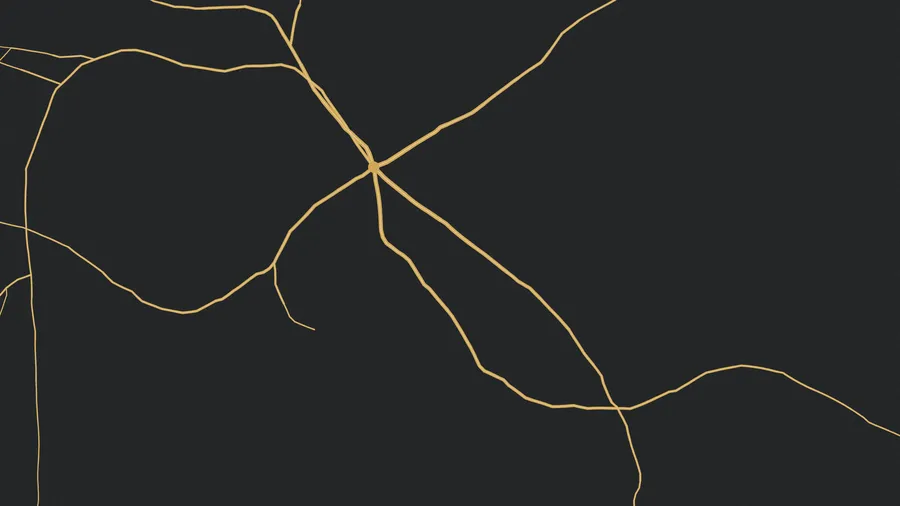
A glazed surface that broke and was mended with gold, so the cracks are the most beautiful part. Every seed breaks it a different way.
Ascent
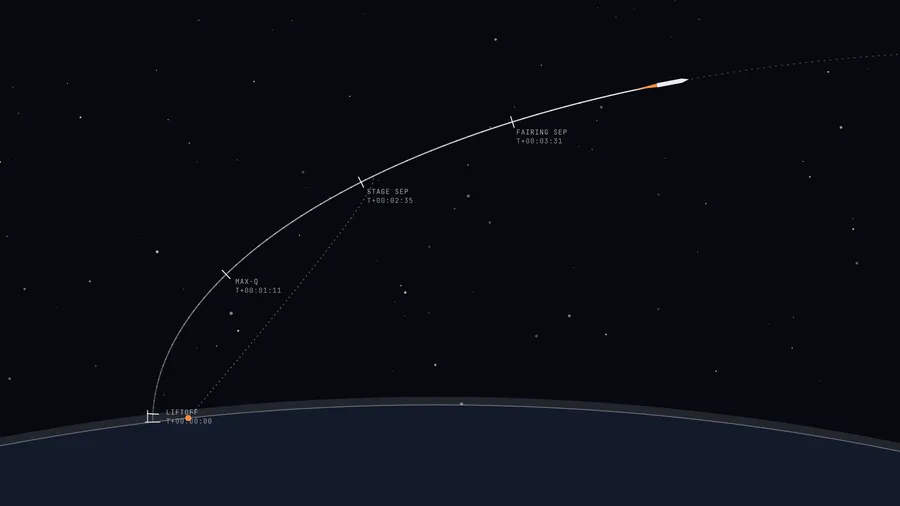
A rocket's climb drawn as a flight plan: the gravity turn over a curved horizon, the flight events along the way, and the booster falling back to land.

Clockwork
A train of spur gears that really mesh: each one is sized in whole teeth, set at the exact distance from its neighbour, and turned so tooth meets gap.
Impasto
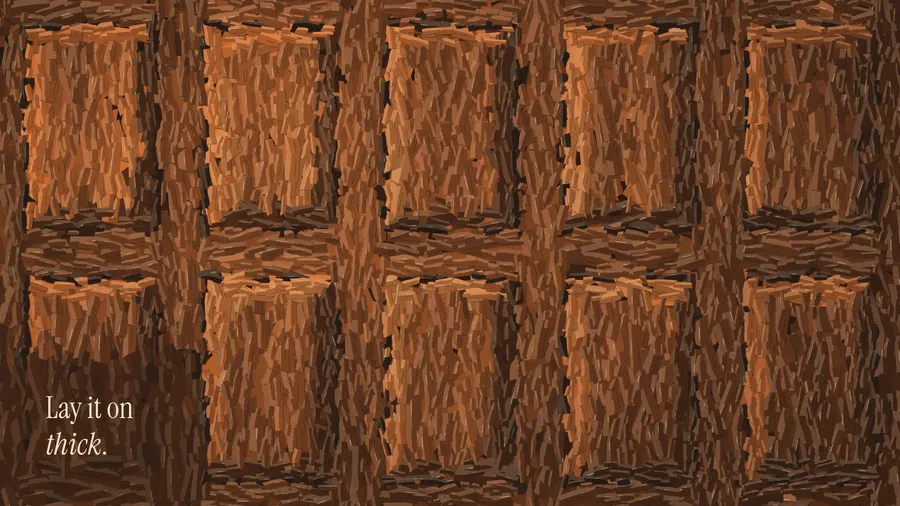
A palette-knife oil painting: thick, angular strokes that follow the form, with lit ridges and cast shadows.
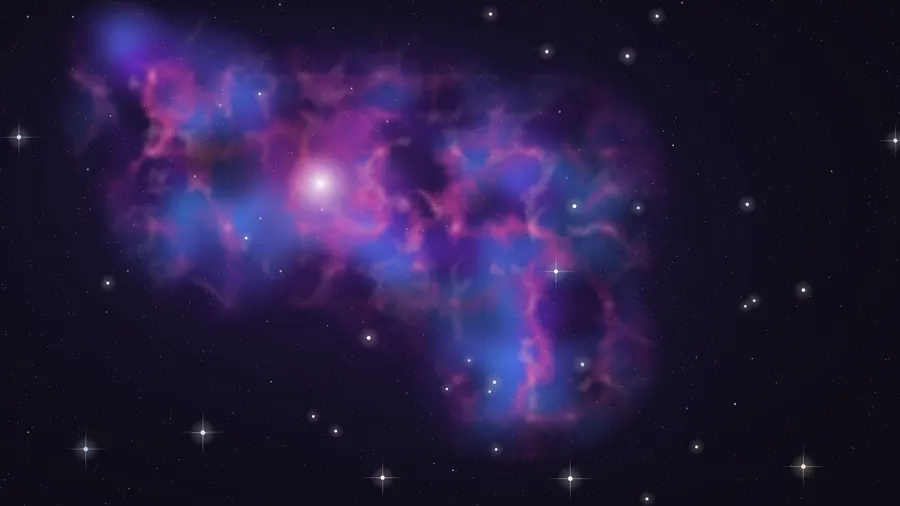
Nebula
Glowing clouds of gas in deep space, with a starfield of small and bright stars and an optional bright core. Works on tall phones and wide monitors alike.

Frutiger Aero
The glossy look of mid-2000s screens: a bright sky gradient, shiny see-through bubbles, soft light rays and a curve of water or grass.